Every house has its temperature personality. The bedroom stays warm like a sauna; the room over the garage never makes it past tepid; the basement is a cold corner or is frozen at the same time as the main floor overcooks. A single thermostat doesn’t know these quirks — it simply commands heat until some average point is reached, then lets the imbalances continue. Zoning is the careful answer: divide the house into distinct heating areas, each with its own thermostat, and let your gas heating system serve each zone as its own customer.
What zoning actually does
Modern hydronic systems implement zoning with a set of controllable valves — usually a zone valve per area — linked to a dedicated thermostat. When any thermostat calls for heat, its valve opens, the pump runs, and warm water flows to just that part of the house. This is as straightforward as it sounds, but the effect is profound, because the boiler never has to work at a room’s need that no one wants. For a furnace system, zone dampers inside the ducts act as the same kind of gatekeeper for warm air.
The comfort benefit: rooms at their own temperature
Call a licensed ROMA technician — (604) 704-0300
Zoned homes solve the argument that thermostat-wars usually create. The main floor sets a comfortable temperature for the living areas; the upper-floor rooms set their own; the basement dehumidifies or stays warm at the level that suits it; the rooms above the garage, where the heat loss lives, get their own chance for attention. Since warmer air rises and rooms with different sun exposure heat differently, a zoned system simply puts heat exactly where it is called for — and nowhere else.
Where zoning saves energy
When you stop heating rooms you’re not using, you stop spending on the fuel that would have gone there. A house where a teenager has gone off to university can leave the spare bedroom to drop to a lower setpoint in winter; an older adult can keep the main floor space running at a lower daytime schedule rather than maintain a whole-house comfortable zone. None of this is an exact promise of savings — every house and every usage pattern differs — but the directional result is consistent.
Who zoning is right for — and who it’s not
Zoning shines in one-storey homes with distinct activity areas, multi-storey houses that need different levels at different times, additions or converted garage rooms with their own thermostat needs, and any home with high ceilings or separate wings. If your home is a single compact box with a clear large open plan, one well-placed thermostat may serve you fine; the extra hardware isn’t needed. Zoning is also a poor fit for houses with small rooms and extreme house shapes; a competent install can still make it work, but the cost of hardware versus benefit should be evaluated directly.
How installation is handled
Installing zoning on an existing gas hydronic system or furnace means: assessing the loop layout and drain components, installing zone valves or dampers along the circuit, wiring and programming each thermostat, updating the boiler’s control wiring, then bleeding the system and commissioning every zone. It is thorough, installed work — a licensed technician handles all gas connections and control wiring. Ask about thermostat placement, commissioning steps and a zone-by-zone test for the final hand-off.
Maintenance differences after zoning
Zoned systems are only marginally different to maintain, but the zones themselves — valve actuators, damper panels, thermostat batteries — join the register of things that need an annual glance. A zoned system gives a house personality, and it also gives the technician a small set of extra call-outs to keep in good order.
Ready to book? Get a free estimate from ROMA.
Learn more about ROMA’s related services.
Send us a photo of the rating plate and we’ll read it for you
ROMA Heating & Cooling has served Metro Vancouver since 1999 — TSBC-licensed (Gas LGA0202903), bonded & insured, 4.8★ from 221 Google reviews. Upfront flat-rate pricing, free estimates on installs, no hidden fees.
Frequently Asked Questions
Can I add zoning to my existing furnace or boiler?
Yes, in most cases. On hydronic systems, zone valves are added to the loop while the boiler’s pump is configured for the layout. On furnace systems, zone dampers installed in the ducts plus separate thermostats make the same arrangement. A technician confirms the design during an on-site assessment.
Is zoning worth it for a two-storey house?
Usually, yes. The second floor and main floor have different demand because of rising heat, sun exposure and insulation differences. Zoning lets each level hold its own temperature, which commonly eliminates upstairs overheating and the cold-lower-floor problem in the same system. An assessment decides whether your layout benefits.
Does one thermostat per room cost a lot to run?
It runs heat only where you call for it — that’s the whole point. Whether the seasonal fuel bill drops depends on the house. But the comfort gains are where the value is, and the marginal cost of running extra zones is dictated by the hardware, not by the usage alone.
What's the difference between a zone valve and a thermostat?
A thermostat senses the room temperature and decides what it wants: heat or no heat. The zone valve is the mechanical device that opens and closes the water flow to that room, acting on the thermostat’s command. You adjust the thermostat; the valve physically delivers heat to the right place.
Can zoning replace a malfunctioning old thermostat?
Yes and no. If the thermostat itself is the broken problem, replacing it is the fix. But zoning changes the architecture: multiple thermostats, valves and a control board working together. A dead zone valve won’t be cured by a new thermostat alone — it needs a proper diagnosis of the entire zone system.
Reviewed by the ROMA Heating & Cooling team — TSBC-licensed gas contractor (Gas LGA0202903), serving Greater Vancouver since 1999. Updated September 2026.
What Greater Vancouver Homeowners Say
“Nelson worked hard to get the NTI unit fixed. He was always polite, courteous and on time.”
“As always Nelson was super efficient. Showed up on time and was quick to work. I had a full maintenance done on the fireplaces and furnace. He was awesome. I won’t use anyone else.”
“Excellent service. Andy had a spare Carrier inducer with him which saved us time.”
“Was very prompt to respond to our issues. Technician was scheduled for the day following my initial call.”
“Very professional heating company. Price is reasonable, excellent work.”
“Highly recommend this company. It was a pleasure dealing with Shawn and Nelson.”
“Professional and courteous technicians with attention to detail and customer needs.”
“Always great, friendly service. Serviced the hot water on-demand system. Honest and informative. Thanks!”
“Speedy response time, honest, and professional service from start to finish.”
Why Greater Vancouver Trusts ROMA Heating & Cooling
ROMA Heating & Cooling has installed, repaired and maintained heating and cooling systems across Metro Vancouver since 1999. Our team are TSBC-licensed gas fitters (Gas LGA0202903) and Red Seal-trained technicians — licensed, bonded and insured — and we back every job with upfront, flat-rate pricing and a 100% satisfaction guarantee. We hold a 4.8★ rating from 221+ Google reviews.
- Authorized for 30+ brands (Lennox, Carrier, Viessmann, Navien, Rheem & more)
- Upfront flat-rate pricing — no overtime or hidden fees
- Free, no-obligation estimates on new installations
- Locally owned & operated in Burnaby, BC
No Hidden Fees
Our service rates are transparent and easy to understand. You approve upfront, flat-rate pricing before we start — so you never get a bill you didn’t expect.
Licensed & Bonded
ROMA is a TSBC-licensed gas contractor (Gas LGA0202903). Our technicians are bonded, insured and Red Seal-trained — qualified for any heating or cooling system.
Free Estimates
We offer free, no-obligation estimates on new installations — furnaces, boilers, heat pumps, air conditioners, tankless and hot-water tanks.
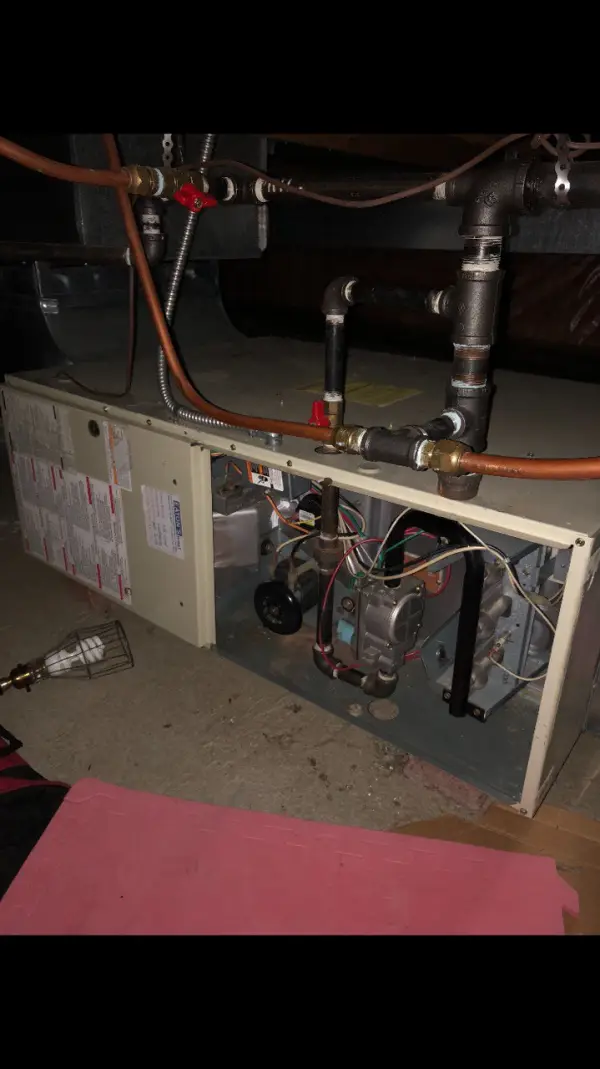
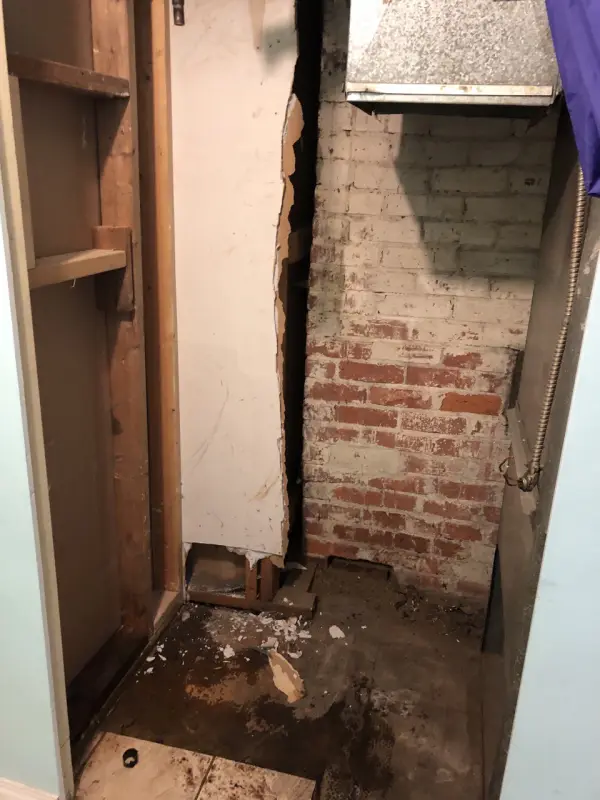
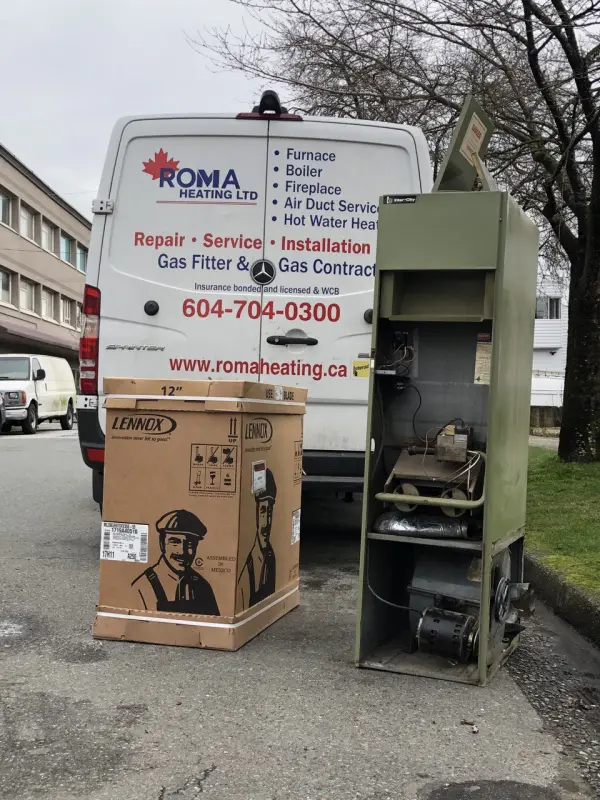
Real ROMA heating work. These photos are from our own jobs, not stock images. See more in our work gallery or call (604) 704-0300.