Hot-water heating from a gas boiler can reach a room in two very different ways: through tubing buried in or under the floor, or through radiators on the wall. People who have lived with warm floors in a bathroom or basement often want them everywhere; people renovating a finished house often discover that panel radiators are the only practical option. ROMA Heating designs, installs and services both across Greater Vancouver, and this guide is meant to help you match the emitter to the room.
How does in-floor radiant heating work?
Flexible tubing is laid in loops across the floor area, either embedded in a concrete slab, set in a thin pour over a subfloor, or fastened under the subfloor between joists with heat-transfer plates. Warm water from the boiler flows through a manifold into each loop, heating the floor surface, which then warms people and objects in the room mostly by radiation. Because the whole floor is the heater, it works at relatively low water temperatures.
How do panel radiators work?
Call ROMA Heating & Cooling — (604) 704-0300
Panel radiators are steel units, one or more panels thick, mounted on walls — usually under windows where heat loss is greatest. Hot water flows through them, and they give off heat by radiation from the front face and by convection through fins behind. Each panel can have its own thermostatic valve, and they come in many heights and lengths to fit around furniture and windows.
How do they stack up?
| Question | In-floor radiant | Panel radiators |
|---|---|---|
| Comfort feel | Warm feet, very even room temperature | Warm walls and air, slight gradient near the unit |
| How fast a room warms | Slow, especially in concrete | Quick |
| Visible equipment | None in the room | Panels on walls |
| Floor coverings | Tile and stone ideal; thick carpet reduces output | No effect |
| Retrofit difficulty | High unless floors are being replaced | Moderate; wall mounting and small piping |
| Water temperature needed | Low | Low to moderate, if sized generously |
| Room-by-room control | By loop or zone | By individual valve |
| Repair access | Tubing hidden; manifold accessible | Everything visible and reachable |
Which gives better comfort in a wet, cool climate?
Warm floors are hard to beat in a Greater Vancouver basement, where concrete slabs stay cold and damp most of the year. A heated slab in a basement suite or rec room makes the space feel dry and livable in a way that no wall heater quite matches. Bathrooms with tile floors are another favourite.
Panel radiators are better in rooms where you want quick changes: bedrooms heated only at night, home offices, or spaces with large sunny windows where heat needs can swing through the day. A slab that has soaked up heat keeps releasing it even after the sun breaks through, which can overheat a south-facing room on a bright February afternoon.
How hard is each to install in an existing home?
In-floor radiant is simplest in new construction or when floors are being replaced anyway. In a basement, it can go into a new slab or over the existing slab with insulation and a thin topping, although that raises floor height and affects doors and stairs. On wood-framed floors, under-floor installation from an open basement ceiling is possible but needs good insulation below the tubing to push heat upward.
Panel radiators can be added to most finished homes with limited disruption: small supply and return pipes run through walls, floors or baseboards, and the panel hangs on brackets. In a Vancouver Special where the lower floor is being converted to a suite, panels can be the fastest way to add hydronic heat without tearing up floors.
How do they pair with a condensing boiler?
Both are good partners because both can run at low water temperatures, which lets a condensing boiler recover the most heat from its exhaust. In-floor systems often need a mixing valve so floors never get too hot, while panels simply need to be sized generously for the room. Combining both on one boiler is common, with separate zones or mixing so each gets the water temperature it needs.
Clean system water matters for both. Our soft water means mineral buildup is not the issue here; the concern is magnetite and debris from older steel parts in a mixed system. A dirt separator and inhibitor keep tubing, panels and the boiler healthy.
What about floor finishes and furniture?
Radiant floors work best under tile, stone, polished concrete and many engineered wood products. Thick carpet and heavy underlay act like insulation and can limit heat output, and large rugs or low platform beds can create cool spots. Owners should check flooring manufacturers’ guidance for use over radiant heat.
Panels need a clear wall space. Long sofas, built-in shelving and floor-length curtains in front of a panel all reduce its output, so layouts should be planned together.
Owners who choose radiant should also keep a record of where the tubing runs, ideally with photos taken before the floor is covered. That record is invaluable years later when someone wants to drill for a toilet flange, anchor a kitchen island or install a new door threshold.
Can you mix radiant floors and panels in one house?
Yes, and it is often the best approach. Radiant floors in a basement suite, bathrooms and a kitchen, with panels on upper floors and bedrooms, gives comfort where it counts and quick response where it matters. The boiler controls and piping need to be designed for both, which is a routine job for a hydronic installer.
Which should you choose?
Choose in-floor radiant if you are building new, pouring a new basement slab, replacing floors, or want invisible heat and warm tile underfoot.
Choose panel radiators if you are working in a finished house, want quick response and room-level control, or need to heat a space without lifting floors.
Combine them if different rooms have different needs, which is common in multi-level homes with suites.
Cost is driven by floor area, installation method, floor build-up, the number of zones and panels, boiler and control changes, and finishing work. ROMA prepares flat-rate written quotes and offers financing OAC.
How can ROMA help?
Our heating installation team designs and installs radiant loops, panels and the boiler that feeds them. For existing hydronic systems, our boiler repair and boiler cleaning services keep everything running cleanly. Book a consultation or email your floor plans to info@romaheating.ca.
A gas safety note for boiler homes: if you smell gas, get everyone outside, don’t touch switches, and call FortisBC’s emergency line and 911 from outdoors. A CO alarm or symptoms like headache or nausea mean getting out at once and calling 911.
Tell us what you have — the brand, the model, and what it’s doing — and we’ll come back with the honest picture. Call ROMA on (604) 704-0300 or email info@romaheating.ca to talk through the right hydronic setup.
Learn more about ROMA’s related services.
Need a licensed gas technician in Greater Vancouver?
ROMA Heating & Cooling has served Metro Vancouver since 1999 — TSBC-licensed (Gas LGA0202903), bonded & insured, 4.8★ from 221 Google reviews. Upfront flat-rate pricing with a written quote, free estimates on installs, financing available (OAC), 7 days a week. For exact pricing call us or email info@romaheating.ca.
Frequently Asked Questions
Is in-floor radiant heating worth it in a Vancouver basement suite?
It is often one of the best uses of radiant heat, because basement slabs stay cold and damp and warm floors make the suite feel dry and comfortable. The catch is installation: it suits new slabs or major renovations. If floors are staying, panel radiators give tenants their own controllable heat with far less disruption.
Can I add panel radiators to my Burnaby home that already has in-floor heat on the lower floor?
Usually, yes. The boiler and controls need to supply two different water temperatures, often through a mixing valve for the floors and a separate zone for panels. A technician will check the boiler’s capacity and piping layout first. Mixed systems are common and work well when designed together.
Does carpet ruin in-floor radiant heating in a Greater Vancouver home?
It does not ruin it, but thick carpet and dense underlay insulate the floor and reduce how much heat reaches the room. Thinner carpet with a low-resistance underlay performs better. Tile, stone and many engineered wood floors work best. Check flooring manufacturers’ guidance for radiant compatibility before choosing finishes.
Which responds faster in a Coquitlam bedroom used only at night?
Panel radiators. They heat up within minutes and cool down quickly, so a bedroom can warm for bedtime and back off overnight. Radiant floors, especially in concrete, respond slowly and are better suited to spaces kept at a steady temperature. Some owners use radiant for bathrooms and panels for bedrooms.
Reviewed by the ROMA Heating & Cooling team — TSBC-licensed gas contractor (Gas LGA0202903), serving Greater Vancouver since 1999. Updated October 2026.
What Greater Vancouver Homeowners Say
“Nelson worked hard to get the NTI unit fixed. He was always polite, courteous and on time.”
“As always Nelson was super efficient. Showed up on time and was quick to work. I had a full maintenance done on the fireplaces and furnace. He was awesome. I won’t use anyone else.”
“Excellent service. Andy had a spare Carrier inducer with him which saved us time.”
“Was very prompt to respond to our issues. Technician was scheduled for the day following my initial call.”
“Very professional heating company. Price is reasonable, excellent work.”
“Highly recommend this company. It was a pleasure dealing with Shawn and Nelson.”
“Professional and courteous technicians with attention to detail and customer needs.”
“Always great, friendly service. Serviced the hot water on-demand system. Honest and informative. Thanks!”
“Speedy response time, honest, and professional service from start to finish.”
Why Greater Vancouver Trusts ROMA Heating & Cooling
ROMA Heating & Cooling has installed, repaired and maintained heating and cooling systems across Metro Vancouver since 1999. Our team are TSBC-licensed gas fitters (Gas LGA0202903) and Red Seal-trained technicians — licensed, bonded and insured — and we back every job with upfront, flat-rate pricing and a 100% satisfaction guarantee. We hold a 4.8★ rating from 221+ Google reviews.
- Authorized for 30+ brands (Lennox, Carrier, Viessmann, Navien, Rheem & more)
- Upfront flat-rate pricing — no overtime or hidden fees
- Free, no-obligation estimates on new installations
- Locally owned & operated in Burnaby, BC
No Hidden Fees
Our service rates are transparent and easy to understand. You approve upfront, flat-rate pricing before we start — so you never get a bill you didn’t expect.
Licensed & Bonded
ROMA is a TSBC-licensed gas contractor (Gas LGA0202903). Our technicians are bonded, insured and Red Seal-trained — qualified for any heating or cooling system.
Free Estimates
We offer free, no-obligation estimates on new installations — furnaces, boilers, heat pumps, air conditioners, tankless and hot-water tanks.
More ROMA services in Vancouver
Part of our Boiler Guide: Hydronic Heating Explained for Metro Vancouver Homes › How boilers & hydronic heating work
Related guides in this topic:
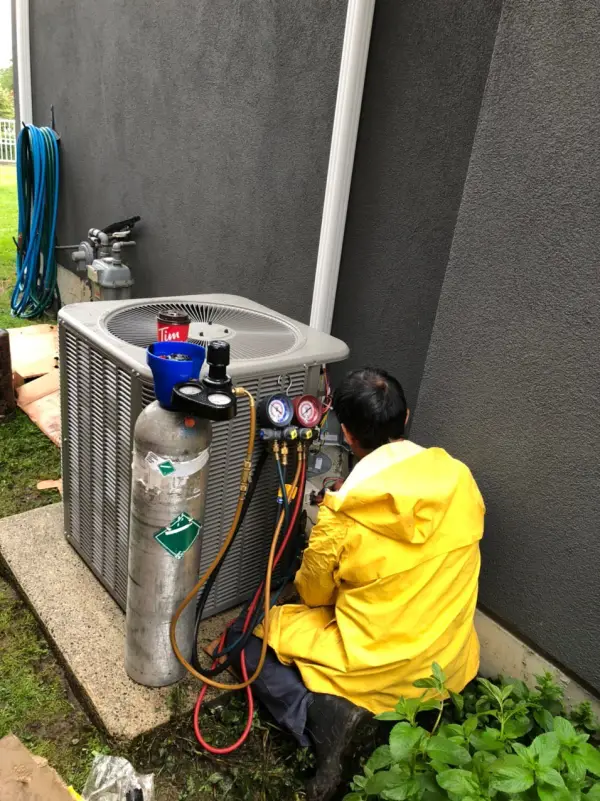
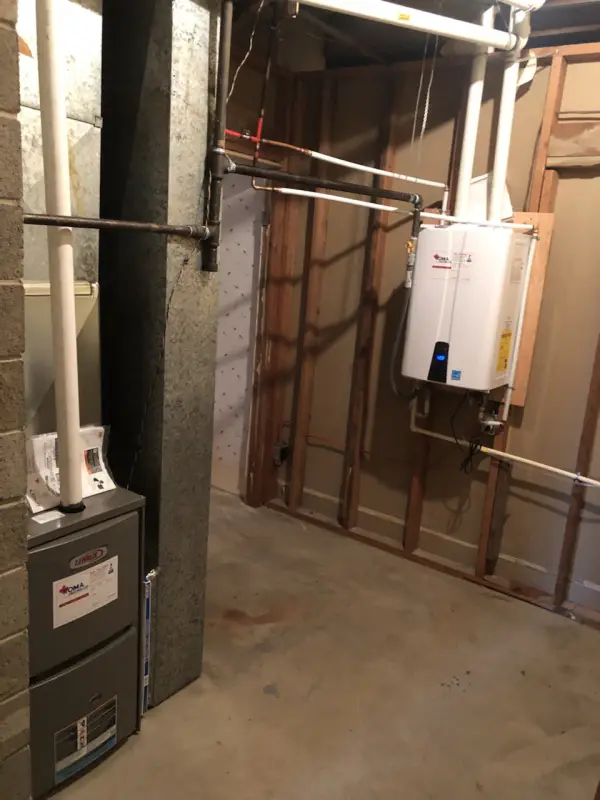
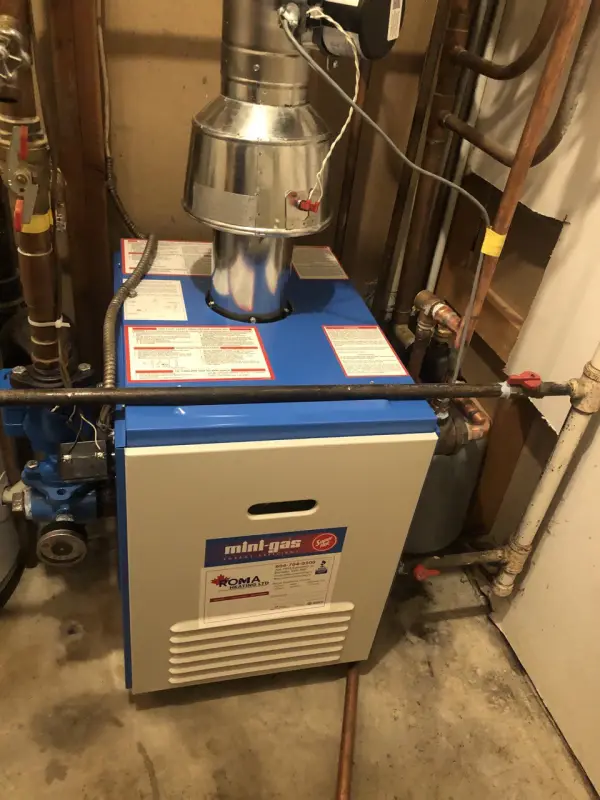
Real ROMA boiler work. These photos are from our own jobs, not stock images. See more in our work gallery or call (604) 704-0300.