Quick answer: A weak furnace run capacitor can make the blower hum, start slowly or not run, and the furnace may overheat and shut down. ROMA tests the capacitor and motor and replaces what has failed. Do not replace one yourself; call (604) 704-0300.
Key takeaways
- A run capacitor helps the blower motor start and keep turning on many gas furnaces.
- Signs of a weak capacitor include a humming blower, slow start or a blower that will not run.
- A weak capacitor can let the furnace overheat and shut down.
- Homeowners should not replace a capacitor themselves, since capacitors can hold a dangerous electrical charge.
Inside many gas furnaces is a small cylindrical part most homeowners never notice: the blower motor’s run capacitor. It gives the motor the electrical nudge it needs to start and helps it run efficiently. When a capacitor weakens or fails, the blower hums without spinning, starts sluggishly, or runs slow — and without enough airflow, the furnace overheats and its safety limit shuts the burners off. ROMA Heating & Cooling replaces furnace capacitors across Greater Vancouver, and we always check the motor too, because the two often fail together.
Gas and CO safety comes first: if you smell gas, get everyone out, don’t touch switches, and call FortisBC’s emergency line and 911 from outside. If a carbon monoxide alarm sounds or anyone feels dizzy or sick indoors, leave and call 911.
Which furnaces use a capacitor?
Many furnaces with conventional permanent split capacitor blower motors — common on older and some current single-stage models — rely on a run capacitor. Some inducer motors use one too. Many newer furnaces with variable-speed electronically commutated motors don’t use a separate run capacitor at all, and their faults look different. Part of our diagnosis is identifying which type of motor your furnace has, so we don’t chase a part that isn’t there.
What are the signs of a failing furnace capacitor?
Call a licensed ROMA gas technician — (604) 704-0300
- A humming sound from the furnace when the blower should start, but no air moving.
- The blower starts only after a delay, or needs several attempts.
- Weak airflow at the registers even though the burners are lit.
- The furnace heats briefly, then shuts off and restarts repeatedly.
- A burning or electrical smell near the blower compartment — turn the furnace off and call.
- A bulging or leaking capacitor, visible only to a technician when the panel is off.
Why does a weak capacitor make the furnace shut down?
A furnace needs airflow to carry heat away from the heat exchanger. If the blower doesn’t run or runs slowly, heat builds up and the high-limit switch cuts the burners to prevent overheating. When things cool, the furnace tries again — a cycle that stresses the heat exchanger and the limit switch, and leaves the house cold. Fixing the capacitor restores airflow and ends the cycle, provided the motor itself is still healthy.
| Test result | What it means | Likely repair |
|---|---|---|
| Capacitor below its rated value | Weak capacitor | Replace capacitor |
| Capacitor fine, motor hums, won’t turn | Seized bearings or failed motor | Replace motor (and capacitor) |
| Capacitor fine, motor runs hot or slow | Motor wearing out | Plan motor replacement |
| No power to motor | Control board, relay or wiring | Electrical diagnosis |
| Motor fine, airflow still poor | Filter, ductwork or blower wheel dirt | Clean wheel; correct airflow |
Why shouldn’t homeowners replace a capacitor themselves?
Capacitors store electrical energy and can deliver a dangerous shock even after the power is off. Replacing one involves working inside the furnace cabinet near high-voltage wiring and moving parts. Just as important, a capacitor that fails often signals a motor that’s struggling; swapping the capacitor alone may get the blower going for a few days before the motor gives out. A technician tests both and handles the wiring safely.
How does ROMA replace a furnace capacitor?
- Confirm the symptom and identify the blower motor type.
- Safely discharge and test the capacitor against its rating.
- Test the motor’s windings, bearings and current draw.
- Give you a written flat-rate price for the repair that’s actually needed.
- Install a correctly rated capacitor, secure wiring and mounting.
- Run the furnace through full cycles, checking airflow and temperature rise.
Could the blower wheel or filter be the real problem?
Sometimes. A blower wheel caked with dust, or a filter so clogged it barely passes air, makes the motor work harder and run hotter — which shortens both motor and capacitor life. We check both and clean the wheel if it’s heavily soiled. Replacing a capacitor without addressing a choked filter just sets up the next failure.
Is it worth repairing an older furnace’s blower?
A capacitor is an inexpensive part, so replacing it is almost always worthwhile on a furnace that’s otherwise sound. A motor replacement is more significant; on an older furnace with other issues, we’ll compare it honestly with a new furnace and offer a free estimate. On a newer furnace with a variable-speed motor, motor or module repairs follow a different path, and we’ll explain it.
Why do capacitors fail in the first place?
Heat and age are the main culprits. Capacitors sit inside a warm furnace cabinet, and over years their internal materials break down, so their capacity slowly drops below what the motor needs. Power surges and brownouts can accelerate that. A blower that works too hard — because of a clogged filter, closed registers or restrictive ductwork — runs hotter and puts extra strain on the capacitor. A furnace in a hot attic or a garage that bakes in summer may also see shorter capacitor life. When we replace one, we look at these conditions so the new part isn’t set up to fail early.
What can you do while waiting for the repair?
If the blower is humming but not spinning, switch the furnace off at the thermostat or service switch to stop it cycling against its limit. Check that the filter isn’t clogged and that supply and return grilles aren’t blocked by furniture. Stay warm with electric space heaters placed safely away from bedding and curtains, and never use a gas oven or stove for heat. Please don’t open the blower compartment or poke at the motor.
Where do we replace furnace capacitors?
Across Greater Vancouver: Vancouver, Burnaby, New Westminster, Richmond, Coquitlam, Port Moody, the North Shore, Surrey, Delta, White Rock and Langley. Basement, crawlspace, attic and garage furnaces all get the same careful electrical work.
ROMA has repaired Greater Vancouver furnaces since 1999. We’re a Technical Safety BC-licensed gas contractor, bonded and insured, rated 4.8 stars from 221 Google reviews, and working 7 days a week from Burnaby. Visit our furnace repair page or book a technician.
Tell us what you have — the brand, the model, and what it’s doing — and we’ll come back with the honest picture. Call ROMA at (604) 704-0300 and we’ll get your furnace blower moving air properly again.
Learn more about ROMA’s related services.
Need a licensed gas technician in Greater Vancouver?
ROMA Heating & Cooling has served Metro Vancouver since 1999 — TSBC-licensed (Gas LGA0202903), bonded & insured, 4.8★ from 221 Google reviews. Upfront flat-rate pricing, free estimates on installs, 0% financing (OAC), no hidden fees, 7 days a week.
Frequently Asked Questions
Why is my furnace humming but no air is coming out?
A hum without airflow often means the blower motor is getting power but can’t start, which on many furnaces points to a failed run capacitor or seized motor bearings. Turn the furnace off to avoid overheating and call ROMA. We test both the capacitor and motor to find which has failed.
Do all furnaces have a blower capacitor?
No. Many furnaces with conventional blower motors use a run capacitor, but many newer furnaces with variable-speed motors don’t have a separate one. Some inducer motors use a capacitor too. ROMA identifies your furnace’s motor type first, so diagnosis focuses on the parts your furnace actually has.
Can a bad capacitor make my furnace shut off in Greater Vancouver?
Yes. A weak capacitor can leave the blower slow or stopped, so heat builds up and the high-limit switch shuts the burners off. The furnace cycles on and off while the house stays cold. Replacing the capacitor usually solves it, as long as the motor is still healthy.
Is it dangerous to replace a furnace capacitor myself?
Yes. Capacitors store electrical energy and can shock even after the power is switched off, and the work is inside a cabinet with high-voltage wiring and moving parts. A failed capacitor may also signal a failing motor. ROMA tests both safely and fits a correctly rated replacement.
Reviewed by the ROMA Heating & Cooling team — TSBC-licensed gas contractor (Gas LGA0202903), serving Greater Vancouver since 1999. Updated September 2026.
How much does HVAC replacement cost in Vancouver, and when is a capacitor the cheaper answer?
It depends on what actually failed. A weak run or start capacitor is a small, quick repair, while a full furnace, heat pump or central AC replacement is priced on equipment, venting, electrical and permits. We confirm which one you need on site, then hand you an upfront flat-rate written quote before any work starts.
When a furnace hums but the blower won’t spin, or the outdoor unit buzzes and stalls, many owners assume the whole system is finished. In plenty of Vancouver homes we open up, the culprit is a swollen capacitor sitting on an otherwise sound motor. When the whole system really is due, these are the things that move the price:
- What you have now and what you want next. Swapping a furnace for a furnace is a different job from moving to a heat pump, or adding central air to a house that has never had it.
- Venting. A high-efficiency gas furnace vents through plastic pipe out a side wall, so an older unit sharing a masonry chimney usually needs a new vent route, plus a plan for the water heater left on that chimney.
- Access. Crawlspace furnaces in East Van bungalows, cramped basement-suite mechanical rooms in Kitsilano and laneway homes with no side yard all change the labour involved.
- Electrical and permits. The City of Vancouver issues gas and electrical permits inside city limits, and some heat pump jobs need panel work by an electrician first.
- Ductwork condition. Undersized returns or crushed flex duct get flagged in the quote instead of being ignored.
For exact pricing on your home, call (604) 704-0300 or email info@romaheating.ca and ask for an upfront flat-rate written quote.
What does ROMA actually do on a capacitor or system replacement call?
We prove the fault before we fix it. The technician tests the capacitor and the motor, works out why the part failed, and only then recommends a part swap or a replacement quote. A capacitor visit usually fits inside an hour or so; a full system replacement is commonly a one- to two-day job.
- Shut off power at the disconnect and the furnace switch, then safely discharge the capacitor before anyone handles it.
- Test the capacitor against the rating printed on its label, and check the motor windings and bearings so a new part isn’t fitted to a dying motor.
- Look for the reason it failed: a clogged filter, a blocked return, heat building up in a closet, or supply problems at the outdoor unit.
- If the system is sound, fit a correctly matched capacitor, restore power and watch several complete cycles.
- If the equipment is near the end of its life, walk you through repair against replacement and leave a written quote, with no pressure to decide that day.
- On a replacement: permits, removal of the old unit, new venting and condensate drain, start-up, combustion and safety checks, and a thermostat walk-through with you. Our heating installation page covers the equipment side in more depth.
Most of the time on a replacement goes into the parts you never see afterward: sealing the plenum connections, pitching the vent pipe so condensate drains back, and making sure the return air path is big enough for the new blower. Those details decide whether a high-efficiency system runs quietly for years or short-cycles from the first week.
How fast can ROMA come out, and how do I book?
We book visits 7 days a week across Greater Vancouver. A same-day visit is possible when the schedule allows, and no-heat or no-cooling calls get looked at first. Booking takes a few minutes by phone, email or the online form, and a couple of photos from you speeds the whole thing up.
Before you call, it helps to have:
- A photo of the rating plate on the furnace, air handler or outdoor unit, usually found inside the access door or on a side panel.
- A plain description of the symptom: “it hums but won’t blow,” “the fan outside isn’t turning,” or “it starts and then shuts off.”
- Access notes: street parking, a locked side gate, a basement-suite tenant who needs notice, or strata rules about trade hours.
You can book a visit online and pick a time that suits you.
Why hire a licensed gas contractor for what looks like a small electrical part?
Because the capacitor sits inside a gas appliance or a refrigerant system, and the right repair often depends on what else the technician notices. ROMA is a TSBC-licensed gas contractor, Gas LGA0202903, bonded and insured, so the same visit can cover the burner, venting and safety controls as well as the part.
- Gas permits are taken out through the City of Vancouver inside city limits and through Technical Safety BC elsewhere in the region.
- We have served Metro Vancouver since 1999 and carry a 4.8★ rating from 221 Google reviews.
- You get an upfront flat-rate written quote, free estimates on installations, and financing OAC if replacement turns out to be the smarter move.
- After an installation we help you register the new equipment with the manufacturer so the paperwork is in order.
A capacitor can hold a charge even with the power off. Testing and replacing one is technician work, the same as anything on the gas, venting or refrigerant side of the system.
Should I replace the capacitor or replace the whole system?
Replace the part when the equipment is otherwise healthy and the failure has a clear cause. Lean toward replacement when capacitors keep failing, the motor or compressor is struggling, or the system is old and already costing you in repeat calls. This table is the rule of thumb our technicians use.
| What we find | Usual recommendation | Why |
|---|---|---|
| First capacitor failure, motor tests healthy, system in good shape | Replace the capacitor | A quick, low-disruption fix that restores normal operation |
| Capacitor failed after a blocked filter or an overheated closet | Replace it and correct the cause | Otherwise the new part fails the same way |
| Repeat capacitor failures within a short time | Test the motor and supply power, then decide | Repeat failures usually point to a deeper problem |
| Noisy motor bearings or failing windings | Quote the motor and compare it with replacement | A new motor on an aging unit may not pay off |
| Older gas furnace with rust, cracked components or venting trouble | Replacement quote | Safety and reliability outweigh the small part |
| You want cooling or lower gas use anyway | Compare a heat pump or high-efficiency furnace | A planned replacement beats an emergency one in January |
Which parts of Greater Vancouver does ROMA serve for HVAC replacement?
We work right across the City of Vancouver, from Dunbar and Kerrisdale to Hastings-Sunrise and Killarney, and throughout the region from our office in Burnaby. That includes North Vancouver, West Vancouver, Richmond, New Westminster, Coquitlam, Port Coquitlam, Port Moody, Surrey, Delta and the Langleys.
Safety first: if you smell gas, get everyone outside, leave the light switches alone, and call FortisBC’s emergency line and 911 once you’re out. If a CO alarm sounds or anyone feels headachy or nauseous, leave the house and call 911.
Want to know whether it’s a part or a replacement? Call (604) 704-0300 or email info@romaheating.ca and tell us what the system is doing.
More questions we hear about this
Is a capacitor replacement much cheaper than replacing my furnace or AC?
Yes, in most cases a capacitor is a small part and a short visit, while a system replacement involves equipment, venting, permits and a day or more of labour. The catch is making sure the capacitor is the real fault and not a symptom of a failing motor. We test both, then give you an upfront flat-rate written quote for whichever repair makes sense.
How long does a full HVAC replacement take in Vancouver?
A straightforward furnace or air handler swap is often finished in a day. Adding a heat pump, rerouting venting away from a chimney, or working in a tight crawlspace can stretch it to two days or a little longer. We tell you the expected timeline in the written quote and book the permit and any electrician time around it.
Will ROMA help me register the warranty on new equipment?
Yes. After an installation we help you complete the manufacturer's product registration and keep the serial numbers, model information and installation date on file with your invoice. Registration terms differ by brand and some have deadlines, so we go over what applies to your specific equipment during the final walk-through rather than guessing at it beforehand.
Can I finance an HVAC replacement, and do you work in strata homes?
Financing is available OAC, and we can explain the application during your free installation estimate. We regularly work in townhouses and condos too. For strata properties, we ask for any approval letters, permitted work hours and elevator or parking arrangements up front so the install day isn't held up at the front door.
What Greater Vancouver Homeowners Say
“Nelson worked hard to get the NTI unit fixed. He was always polite, courteous and on time.”
“As always Nelson was super efficient. Showed up on time and was quick to work. I had a full maintenance done on the fireplaces and furnace. He was awesome. I won’t use anyone else.”
“Excellent service. Andy had a spare Carrier inducer with him which saved us time.”
“Was very prompt to respond to our issues. Technician was scheduled for the day following my initial call.”
“Very professional heating company. Price is reasonable, excellent work.”
“Highly recommend this company. It was a pleasure dealing with Shawn and Nelson.”
“Professional and courteous technicians with attention to detail and customer needs.”
“Always great, friendly service. Serviced the hot water on-demand system. Honest and informative. Thanks!”
“Speedy response time, honest, and professional service from start to finish.”
Why Greater Vancouver Trusts ROMA Heating & Cooling
ROMA Heating & Cooling has installed, repaired and maintained heating and cooling systems across Metro Vancouver since 1999. Our team are TSBC-licensed gas fitters (Gas LGA0202903) and Red Seal-trained technicians — licensed, bonded and insured — and we back every job with upfront, flat-rate pricing and a 100% satisfaction guarantee. We hold a 4.8★ rating from 221+ Google reviews.
- Authorized for 30+ brands (Lennox, Carrier, Viessmann, Navien, Rheem & more)
- Upfront flat-rate pricing — no overtime or hidden fees
- Free, no-obligation estimates on new installations
- Locally owned & operated in Burnaby, BC
No Hidden Fees
Our service rates are transparent and easy to understand. You approve upfront, flat-rate pricing before we start — so you never get a bill you didn’t expect.
Licensed & Bonded
ROMA is a TSBC-licensed gas contractor (Gas LGA0202903). Our technicians are bonded, insured and Red Seal-trained — qualified for any heating or cooling system.
Free Estimates
We offer free, no-obligation estimates on new installations — furnaces, boilers, heat pumps, air conditioners, tankless and hot-water tanks.
More ROMA services in Vancouver
Part of our Gas Furnace Guide: Everything Metro Vancouver Homeowners Need to Know › How gas furnaces work
Related guides in this topic:
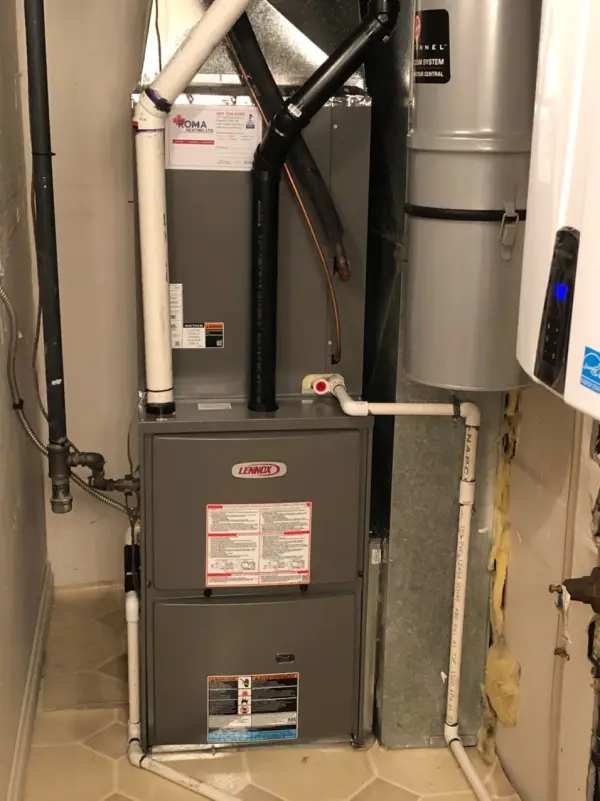
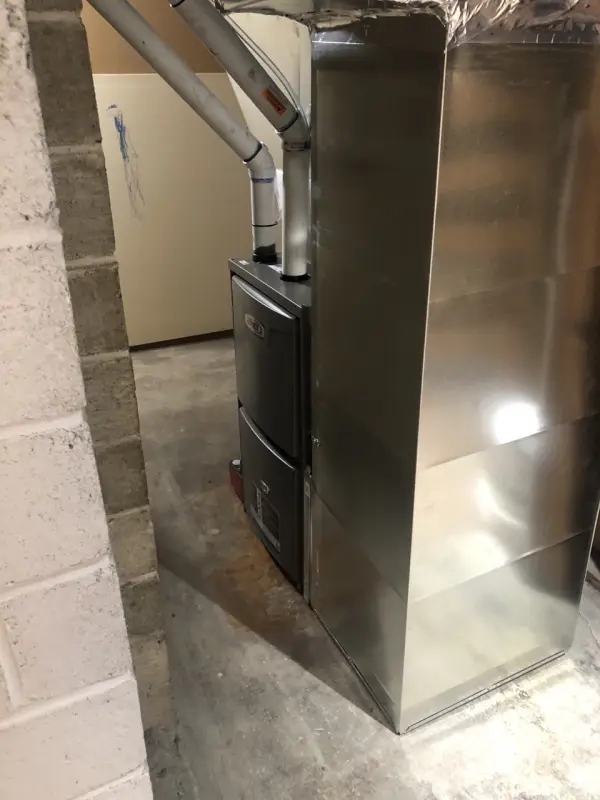
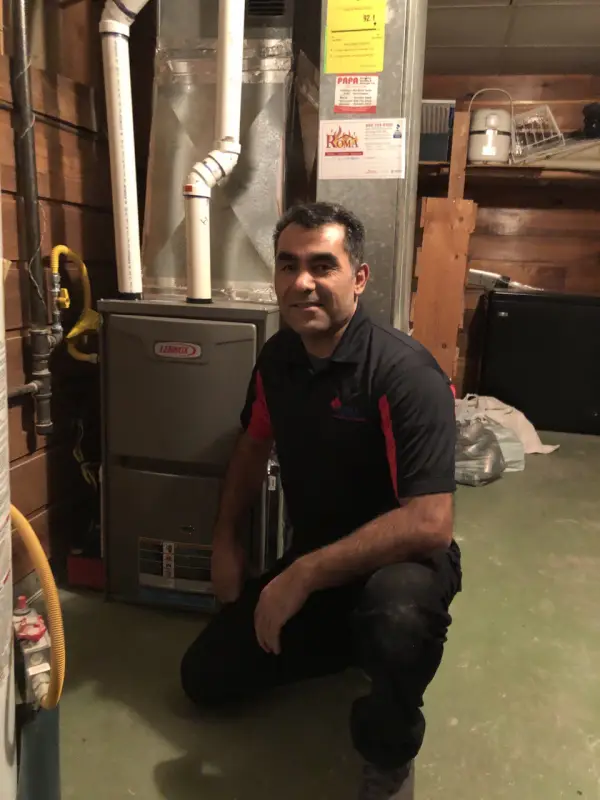
Real ROMA furnace work. These photos are from our own jobs, not stock images. See more in our work gallery or call (604) 704-0300.