Every refrigerant technician’s gauge plugs into the same two small service ports on a dual fuel heat pump’s outdoor unit, and an owner’s first interaction with those ports is usually a hiss, a missing cap, or a pool of oil at the unit’s base. What happens if the service port fails? The short story: refrigerant leaks there, the charge drops, and the system’s capacity fades — slowly, invisibly, and without a break in service. The honest mechanics: a port failure is a core leak (the poppet inside), a missing cap’s exposure story, or the valve body itself compromised. Each path loses charge at its own rate; combined, they take the charge’s honest level off its design value, and the system runs the same house with less working fluid. ROMA Heating & Cooling serves Greater Vancouver under Gas LGA0202903 — (604) 704-0300 or via booking.
The heat pump service overview covers what the service ports actually connect to.
What does the charge loss actually change?
Everything the heat pump does derives from the charge. A thin charge lowers the system’s heat-transfer response: the coil runs with less refrigerant contact, the superheat climbs in cooling or subcool drops in heating, and the compressor works harder to produce the same effect. In a dual fuel heat pump and gas furnace, the impact arrives at the comfort and the bills: the heat pump runs longer, hands more to the gas furnace, and the seasonal budget shifts. The honest impact is a curve: a small monthly drip is a slow curve, a loud hiss is a fast one. A technician’s gauge test reads the actual state of the curve.
What’s visible vs. measured?
Call a licensed ROMA gas technician — (604) 704-0300
| What an owner sees | What a technician measures |
|---|---|
| Hiss, oil at the base, missing cap | Core or body leak at the port |
| System slower to cool or heat | Charge level vs. spec |
| Frost or moisture at the port | The leak’s true rate |
An owner’s observation catches the hiss and the missing cap; the gauge catches the charge. The two together are the full story — which is a technician’s job to assemble.
How does the recovery work?
Repair the leak first (core change or valve service or re-tighten the fitting), then verify the charge by weighing it in against the system’s published amount, then run the system and check the pressures and the superheat/subcooling at the coil. The honest recovery is a sequence: leak sealed, charge confirmed, performance re-verified. The charge must be recovered and weighed during the repair — a technician doesn’t ‘top up’ a leaking system; the fix is the leak, and the amount is the spec.
What does this mean for the gas furnace?
The furnace’s own story is unchanged; its duty is shifted. A heat pump losing charge quietly adds a marginal load to the furnace’s share of the winter. The two machines are one comfort budget, and the service port’s failure is the small end of that budget’s leak. The honest audit includes the changeover history — the pattern of the furnace’s calls — because the symptom’s file travels across both machines.
Is the port failure dangerous for the home?
Not in the dramatic sense — the leak is refrigerant, not gas. The danger is the charge’s slow escape and the system’s declining capacity, and the repair is small. But the gas safety rules stand apart: a smell of gas in the house is out, FortisBC emergency, then 911; a suspected CO event is out, 911. The port’s story and the gas story are separate scripts.
What should an owner do on finding a port issue?
Listen and look: a hiss at the port, oil at the base; note the date. Then book the service — the port’s repair is the cheapest hour in the calendar, and the charge’s verification is part of the same visit. Leave the caps on; if you’d like new caps, say so — it’s a honest nickel’s part.
How hidden is a slow port leak, honestly?
A slow leak hides well: the system works, the house is comfortable, and the only evidence is a barely-fading performance curve. The honest timeline is seasonal: a tiny weep that loses a fraction of charge per quarter takes months to become noticeable, and by then the compressor has been working a slightly harder curve the whole time. That is why port leaks are found at service rather than by feel.
The detection itself is fast once someone looks: a detector sweep at the port, a pressure comparison against the system’s baseline, and the reading. The damage already done is usually minimal, and the charge’s restoration is straightforward. A port leak’s honest takeaway is the same as all small things: found early, it is a visit item; found late, it is a season’s worth of extra work.
Tell us what you have — the brand, the model, and what it’s doing — and we’ll come back with the honest picture. (604) 704-0300, ROMA Heating & Cooling, or /booking/.
Need a licensed gas technician in Greater Vancouver?
ROMA Heating & Cooling has served Metro Vancouver since 1999 — TSBC-licensed (Gas LGA0202903), bonded & insured, 4.8★ from 221 Google reviews. Upfront flat-rate pricing, free estimates on installs, 0% financing (OAC), no hidden fees, 7 days a week.
Frequently Asked Questions
Can a service port leak be fixed without losing the charge?
Often, yes — a core change is a standard technique that swaps the poppet while the charge stays in the circuit. A body or fitting repair is different; the charge is recovered first. Either way a technician’s gauge and judgment decide the route.
Why do port leaks show up after a previous service?
Every gauge connection cycles the core, and a tired core can seat less cleanly after years of connects. It’s not a service error — it’s wear. A cap fitted firmly and a core check at the visit keep the port’s honest state.
Will a small port leak still cause the system to fail?
The system isn’t going to die quietly — the capacity fades, the runtime grows, and the compressor ages under the extra load. The honest warning: a port leak is a schedule-now story, not a season-later one. Book it when the hiss is heard.
Is the charge amount hard to verify?
A technician weighs the recovered and top-up amount against the system’s published charge, then runs the pressures. The verify step removes the guess. The setpoint is the manufacturer’s spec, not an estimate — which is why a weigh-in beats an eyeball.
What about the oil pool at the unit?
Oil at the base is a leak’s fingerprint — the refrigerant’s trace oil carried out with the charge. It’s a reliable sign the leak has been active. The oil’s appearance is the honest yes to ‘is something wrong here?’. Ask the technician about your refrigerant service port failure impact against the unit’s own documentation, which is the reference the service uses for the verdict.
Reviewed by the ROMA Heating & Cooling team — TSBC-licensed gas contractor (Gas LGA0202903), serving Greater Vancouver since 1999. Updated September 2026.
What Greater Vancouver Homeowners Say
“Nelson worked hard to get the NTI unit fixed. He was always polite, courteous and on time.”
“As always Nelson was super efficient. Showed up on time and was quick to work. I had a full maintenance done on the fireplaces and furnace. He was awesome. I won’t use anyone else.”
“Excellent service. Andy had a spare Carrier inducer with him which saved us time.”
“Was very prompt to respond to our issues. Technician was scheduled for the day following my initial call.”
“Very professional heating company. Price is reasonable, excellent work.”
“Highly recommend this company. It was a pleasure dealing with Shawn and Nelson.”
“Professional and courteous technicians with attention to detail and customer needs.”
“Always great, friendly service. Serviced the hot water on-demand system. Honest and informative. Thanks!”
“Speedy response time, honest, and professional service from start to finish.”
Why Greater Vancouver Trusts ROMA Heating & Cooling
ROMA Heating & Cooling has installed, repaired and maintained heating and cooling systems across Metro Vancouver since 1999. Our team are TSBC-licensed gas fitters (Gas LGA0202903) and Red Seal-trained technicians — licensed, bonded and insured — and we back every job with upfront, flat-rate pricing and a 100% satisfaction guarantee. We hold a 4.8★ rating from 221+ Google reviews.
- Authorized for 30+ brands (Lennox, Carrier, Viessmann, Navien, Rheem & more)
- Upfront flat-rate pricing — no overtime or hidden fees
- Free, no-obligation estimates on new installations
- Locally owned & operated in Burnaby, BC
No Hidden Fees
Our service rates are transparent and easy to understand. You approve upfront, flat-rate pricing before we start — so you never get a bill you didn’t expect.
Licensed & Bonded
ROMA is a TSBC-licensed gas contractor (Gas LGA0202903). Our technicians are bonded, insured and Red Seal-trained — qualified for any heating or cooling system.
Free Estimates
We offer free, no-obligation estimates on new installations — furnaces, boilers, heat pumps, air conditioners, tankless and hot-water tanks.
Part of our Heat Pump Guide: Ducted, Ductless and Dual-Fuel Systems for Metro Vancouver › How heat pumps work
Related guides in this topic:
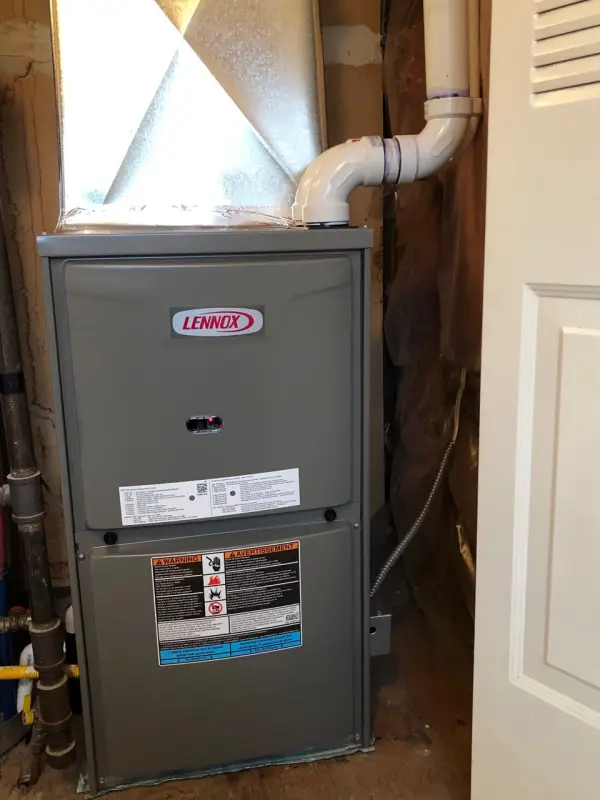
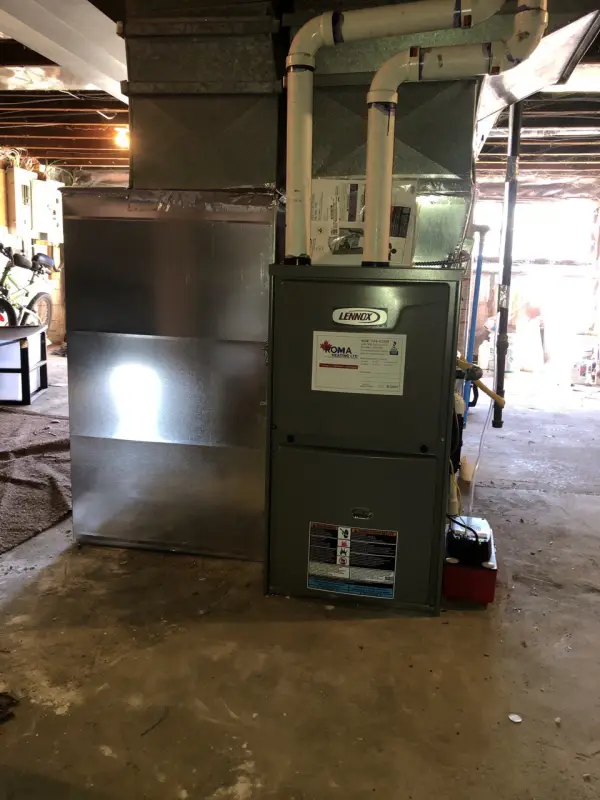
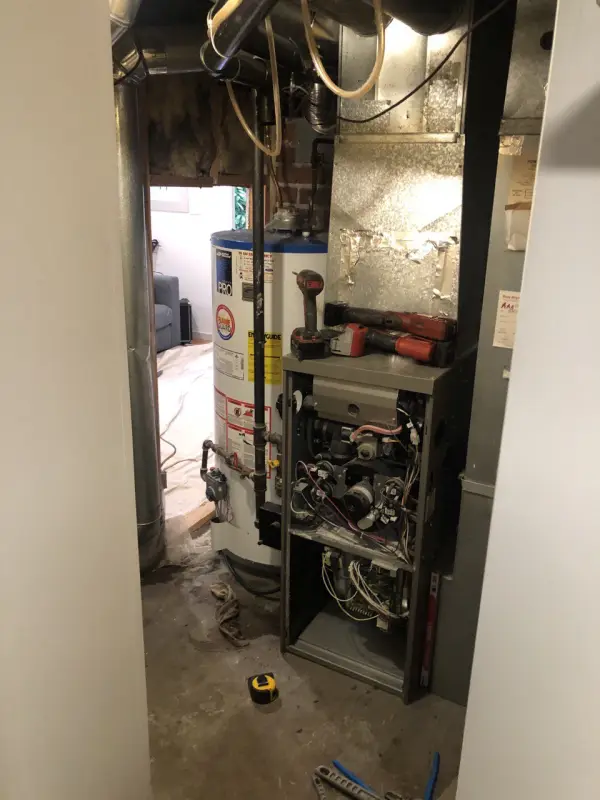
Real ROMA furnace work. These photos are from our own jobs, not stock images. See more in our work gallery or call (604) 704-0300.