Your changeover line is set at 33, but the gas furnace fired at 27 this morning — or the heat pump limped all the way down to 31 before it gave up. The balance point is a number in the logic; the outdoor fan motor is the machine that makes the heat pump’s output real. When the fan is tired — bearings dragging, a capacitor past its prime, windings showing wear — the coil gets less air, the heat pump’s honest output falls, and the line behaves as though the design were different. On a dual fuel heat pump and gas furnace, the fan motor’s condition is one of the quiet authors of a shifted changeover: the setting didn’t move; the machine’s truth did. The read is the fan’s health — run amps at the motor, its noise and speed, the capacitor’s state — before the settings are touched. If the fan is failing visibly, or the heat pump isn’t keeping up and the house is sliding, run on the gas side and call. The CO alarm stays checked; gas smell is the absolute: out, FortisBC emergency, 911.
ROMA Heating & Cooling serves Greater Vancouver — licensed, TSBC-registered (Gas LGA0202903) — and reads the heat pump and the furnace in one visit, with the fan’s story told before any parts list. (604) 704-0300.
Can a fan motor really make a balance point look wrong?
Not make the setting wrong — make the machine’s answer wrong. The balance point assumes the heat pump delivers the capacity its design says; the fan’s airflow is part of that delivery equation. Drop the airflow a meaningful fraction and the machine’s total output falls, so the outdoor temperature at which it can no longer carry the house rises. The result reads like a line that refuses to follow the schedule, when the schedule is the one holding the truth.
What causes problems with the outdoor fan motor when a dual fuel heat pump and gas furnace does not follow the balance point?
Call a licensed ROMA gas technician — (604) 704-0300
| Motor story | Mechanic | Handover behaviour |
|---|---|---|
| Bearing drag | Slower spins, extra current, warmer motor body | Output slides; line fires gas earlier |
| Capacitor weakening | Starts get slower or the fan stalls temporarily | Pump’s delivery becomes stop-and-go |
| Winding wear | Current reads wrong at the motor | Steady delivery loss across the season |
| Dirty wheel and blades | Blades carry debris; airflow drops | Same slide, different shell |
Why does the drift feel like a logic failure?
Because the symptom looks intellectual — a line that isn’t doing its math — when the cause is physical. A homeowner hears the gas fire at the wrong temperature and starts reading thermostat menus, which is exactly where a shifted line hides: the logic is preserving its math against a machine that no longer meets it. The one-detail field read is the amp draw at the outdoor fan during a run, at two ambient temperatures: the numbers changing between mild and cold days name the mechanical story behind the settings.
What does a technician verify on this system?
- Run amps at the outdoor fan motor against the nameplate’s expectation.
- The fan’s speed and noise at the cabinet — stutters, groan, and rattle all pattern differently.
- Capacitor condition on the start side of the motor.
- Airflow delivered across the outdoor coil — the coil’s temperature rise.
- The line’s setting compared to the machine’s actual measured output.
Should I just adjust the balance point to work around the fan?
You can, and it will change the fire’s timing — but working around a delivery problem makes the machine’s story a settings story, and the fan keeps losing the season. The honest sequence reads the fan, verifies the charge, and only then considers the line’s number. ROMA Heating & Cooling treats the balance point as the last clue, not the first fix; book the read with what you’re seeing.
What does ROMA Heating & Cooling make of a fan-vs-line complaint?
The machine’s delivery and the line’s setting, matched or mismatched, read by evidence. When the fan’s read is clean, we say so and move to the sensor; when it’s not, the fan’s workload is explained before the repair is quoted. Tell us what you have — the brand, the model, and what it’s doing — and we’ll come back with the honest picture. Call (604)
There is an honest test that separates the fan’s story from the logic’s in a single evening: the amp draw at the fan on two nights — one mild, one cold — compared against the fan’s own pattern last season. A fan that drags night over night reads the same whether the logic agrees with it or not, and the technician’s sheet records that number with the outdoor temperature, because the two together are the machine’s honest curve.
What else changes as the fan weakens?
- The start’s delay gets measurable — a beat, then a hum, then the spin.
- The coil’s frost pattern shifts to the side the air is low, so the defrost schedule sees a machine it didn’t design.
- The room’s evening dip shows at a different temperature than the set line promised.
Each of those is a clue that the line’s problem is the fan’s delivery, and each is readable without touching a single setting.
Need a licensed gas technician in Greater Vancouver?
ROMA Heating & Cooling has served Metro Vancouver since 1999 — TSBC-licensed (Gas LGA0202903), bonded & insured, 4.8★ from 221 Google reviews. Upfront flat-rate pricing, free estimates on installs, 0% financing (OAC), no hidden fees, 7 days a week.
Frequently Asked Questions
How often should the outdoor fan motor be checked on a dual fuel system?
Each seasonal visit should at minimum include a listen and an amp read while the fan runs — the motor’s wear is gradual, and the diagnostic trick is reading it across seasons rather than once. A winter read at the coldest days catches the wear curve near its worst; the summer visit covers the cooling match.
Is a noisy outdoor fan always the story?
Sometimes. A rattle can be a guard panel touching the blades, debris in the wheel, or a loose mount — none of which cost a motor. The honest read is the noise’s location and the current at the fan, which is exactly how a worn bearing gets named separately from a leaf in the wheel.
Would a capacitor problem show as a balance point drift?
The capacitor’s weakening shows as slow starts and a fan that nearly stalls, and the heat pump’s delivery becomes uneven — which the changeover reads as a lower output and hands over accordingly. The capacitor’s test is fast and cheap; it comes before the motor’s replacement.
Does the fan motor's condition affect cooling season too?
Yes — the same fan serves the coil in both seasons, and both seasons’ delivery shrink together. A changeover shift in winter is often the first visible mark of a fan that was already weakening in summer cooling, just quieter. That is why the read looks at both seasons’ patterns.
What happens if I delay the fan's repair?
The shift worsens gradually — the gas fires earlier, the pump’s efficiency slides, and the fan’s own wear accelerates. There is no safety cliff, but the comfort and fuel cost climb, and the repair eventually gets pricier at the motor’s end. A seasonal read is the better script.
Reviewed by the ROMA Heating & Cooling team — TSBC-licensed gas contractor (Gas LGA0202903), serving Greater Vancouver since 1999. Updated September 2026.
What Greater Vancouver Homeowners Say
“Nelson worked hard to get the NTI unit fixed. He was always polite, courteous and on time.”
“As always Nelson was super efficient. Showed up on time and was quick to work. I had a full maintenance done on the fireplaces and furnace. He was awesome. I won’t use anyone else.”
“Excellent service. Andy had a spare Carrier inducer with him which saved us time.”
“Was very prompt to respond to our issues. Technician was scheduled for the day following my initial call.”
“Very professional heating company. Price is reasonable, excellent work.”
“Highly recommend this company. It was a pleasure dealing with Shawn and Nelson.”
“Professional and courteous technicians with attention to detail and customer needs.”
“Always great, friendly service. Serviced the hot water on-demand system. Honest and informative. Thanks!”
“Speedy response time, honest, and professional service from start to finish.”
Why Greater Vancouver Trusts ROMA Heating & Cooling
ROMA Heating & Cooling has installed, repaired and maintained heating and cooling systems across Metro Vancouver since 1999. Our team are TSBC-licensed gas fitters (Gas LGA0202903) and Red Seal-trained technicians — licensed, bonded and insured — and we back every job with upfront, flat-rate pricing and a 100% satisfaction guarantee. We hold a 4.8★ rating from 221+ Google reviews.
- Authorized for 30+ brands (Lennox, Carrier, Viessmann, Navien, Rheem & more)
- Upfront flat-rate pricing — no overtime or hidden fees
- Free, no-obligation estimates on new installations
- Locally owned & operated in Burnaby, BC
No Hidden Fees
Our service rates are transparent and easy to understand. You approve upfront, flat-rate pricing before we start — so you never get a bill you didn’t expect.
Licensed & Bonded
ROMA is a TSBC-licensed gas contractor (Gas LGA0202903). Our technicians are bonded, insured and Red Seal-trained — qualified for any heating or cooling system.
Free Estimates
We offer free, no-obligation estimates on new installations — furnaces, boilers, heat pumps, air conditioners, tankless and hot-water tanks.
Part of our Heat Pump Guide: Ducted, Ductless and Dual-Fuel Systems for Metro Vancouver › Heat pump problems
Related guides in this topic:
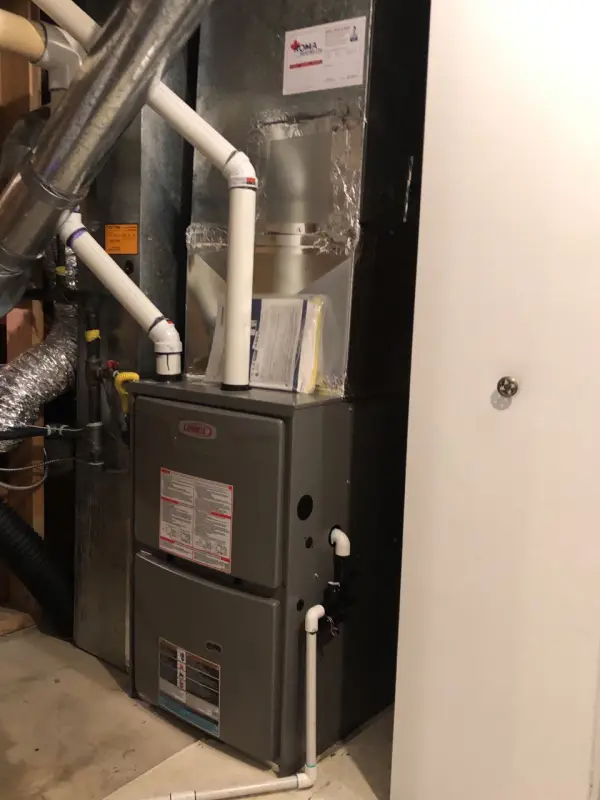
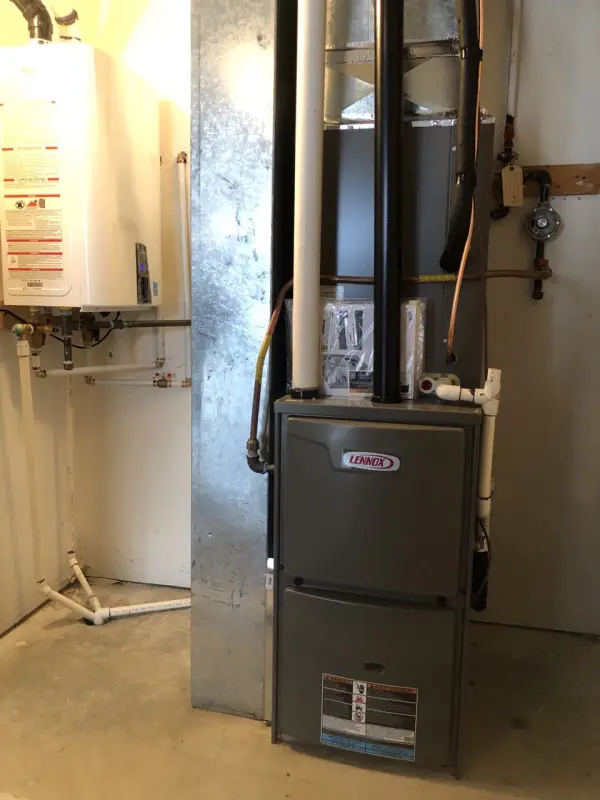
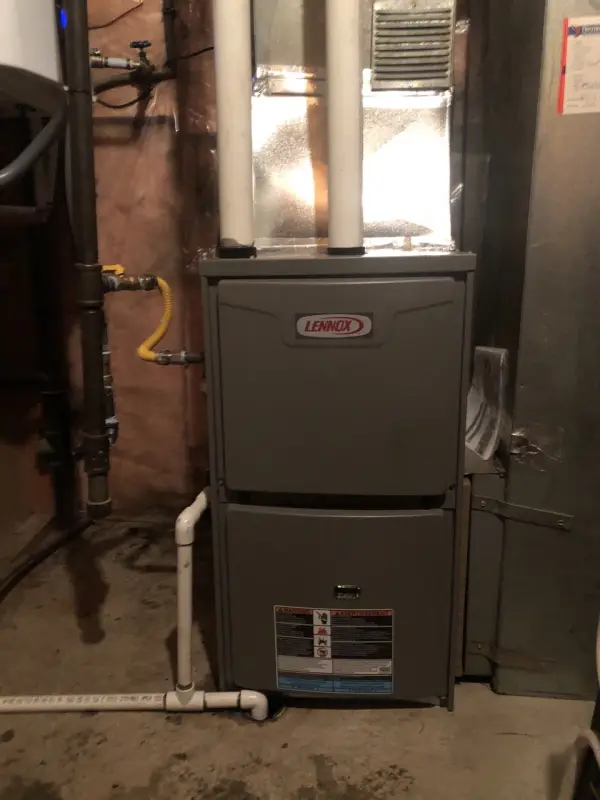
Real ROMA furnace work. These photos are from our own jobs, not stock images. See more in our work gallery or call (604) 704-0300.