Queens Park is New Westminster’s showpiece: tree-shaded streets of heritage homes, many from the late 1800s and early 1900s, carefully kept porches, stained glass and big rooms with bigger windows. Under a good number of these houses sits a heating system almost as old as the house itself — oversized cast-iron radiators, thick pipes and a boiler that has been replaced once or twice but never really rethought. ROMA Heating & Cooling installs gas boilers in Queens Park homes, and we treat these legacy systems with respect. Most of what’s there is worth keeping; it just needs to be connected to a modern boiler the right way.
What might you find in an old Queens Park heating system?
| Legacy feature | What it means for a new boiler | How we handle it |
|---|---|---|
| Large-diameter supply and return pipes | Holds a big volume of water; flow behaves differently from modern loops | Primary-secondary piping or a hydraulic separator |
| Oversized cast-iron radiators | Can heat rooms with cooler water than you’d expect | Outdoor reset set low for efficient condensing |
| Signs of a former gravity layout | Piping sized to circulate without a pump | Pump and separator chosen so the boiler gets steady flow |
| Heavy sludge and magnetite | Can clog a modern heat exchanger quickly | Thorough flush plus a separator or magnetic filter |
| Brick chimney shared with a water heater | Old flue may be too large once the boiler leaves it | Liner for the remaining appliance, or retire the chimney |
| Radiator valves that haven’t moved in years | May leak or seize when the system is drained | Checked on the survey and noted on the quote |
Why do large old radiators suit a modern boiler so well?
Call a licensed ROMA gas technician — (604) 704-0300
It seems counter-intuitive, but big radiators are an advantage. Because they have so much surface area, they can keep rooms comfortable with lower water temperatures, and a condensing boiler is most efficient when return water comes back cool. With an outdoor sensor and a properly set reset curve, the boiler runs at gentle temperatures most of the winter and only pushes hotter water on the coldest days.
The result is steady, quiet warmth — the kind of heat these houses were always meant to have — with far less gas than the old boiler burned.
How does ROMA connect a new boiler to a heritage loop?
The key is separating the boiler’s flow from the big old loop. Modern wall-hung boilers have small heat exchangers that need a specific flow rate; a large old system moves water differently. A primary-secondary arrangement or a hydraulic separator lets each side run at its own pace. It also gives us a place to catch debris before it reaches the boiler.
We flush the loop thoroughly before connecting anything. New Westminster’s water is soft, so there’s no mineral scaling to fight, but a century of circulation leaves dark sludge and magnetite that will clog a new heat exchanger within a few seasons if left in place.
What about rooms that were added later?
Many Queens Park homes have had kitchens, sunrooms or bathrooms added over the decades, sometimes heated by baseboard or in-floor loops with different temperature needs. We map every circuit on the survey and add zoning or mixing where needed so the old and new parts of the house each get the right water.
How is venting planned on a heritage house?
A condensing boiler exhausts through plastic pipe, usually out a side or rear wall. We look for a terminal location that keeps the street face untouched, respects clearances from windows, doors and neighbours, and suits the house’s character. If your home carries heritage protection, let us know so we can account for any restrictions.
Once the boiler leaves the chimney, we check whether a gas water heater still uses it. An old, large flue can be too big for one small appliance, leading to poor venting and condensation damage. A properly sized liner, or a sealed-combustion water heater that retires the chimney, solves it.
What happens on a Queens Park installation day?
With the gas permit in place, the crew protects floors, stairs and doorways — heritage finishes deserve extra care — and drains the system. The old boiler comes out, which in an older basement can take patience. The new boiler, separator and pump are mounted and piped, gas and power connected, and the vent and condensate drain run. After flushing and refilling, we bleed every radiator, test gas joints, analyze combustion and set the reset curve before walking you through the controls.
Why do Queens Park owners trust ROMA?
Since 1999, ROMA has worked on everything from brand-new townhomes to century-old houses across Metro Vancouver and New Westminster. Technical Safety BC licenses us as a gas contractor (LGA0202903), and we’re bonded and insured. Google reviewers rate us 4.8 stars over 221 reviews. Installation estimates carry no charge, quotes are flat-rate and written, and approved customers can finance the work.
For safety in an older home: should you smell gas, get everyone out, leave switches alone and phone FortisBC’s emergency line and 911 from the sidewalk; a CO alarm or a family feeling dizzy, sick or headachy means go outside and call 911.
If you’d like the old system assessed before deciding, book an inspection. Otherwise, arrange a Queens Park boiler survey.
Tell us what you have — the brand, the model, and what it’s doing — and we’ll come back with the honest picture. Call (604) 704-0300 and ROMA will plan a boiler that respects your Queens Park home’s original heating.
Learn more about ROMA’s related services.
Need a licensed gas technician in Greater Vancouver?
ROMA Heating & Cooling has served Metro Vancouver since 1999 — TSBC-licensed (Gas LGA0202903), bonded & insured, 4.8★ from 221 Google reviews. Upfront flat-rate pricing, free estimates on installs, 0% financing (OAC), no hidden fees, 7 days a week.
Frequently Asked Questions
Can a modern boiler work with the big old pipes in my Queens Park heritage house?
Yes. Some very old systems were built with large-diameter pipes and big radiators, sometimes originally designed to circulate without a pump. A modern boiler can serve them well, but the piping connection needs thought: a primary-secondary arrangement or a hydraulic separator is often used so the boiler gets the flow it needs regardless of the large old loop.
How dirty is the water in an old Queens Park radiator system?
Often very. Decades of circulation leave black sludge and magnetite in the pipes and radiators. New Westminster’s water is soft, so this isn’t mineral deposits, but it’s harmful to a new heat exchanger. We flush the system and usually recommend a separator or magnetic filter on older heritage loops.
Will a boiler vent spoil the look of my Queens Park heritage home?
We work hard to avoid it. The vent terminal is small, and we look for side or rear walls that keep the street face unchanged while meeting clearance rules. If your home has heritage designation or restrictions, tell us and we’ll factor them into the vent plan.
How long does a boiler replacement take in an older Queens Park house?
Plan on a full working day for a straightforward swap, sometimes longer. Heritage homes often need extra time for flushing a large old loop, installing a hydraulic separator, or dealing with a chimney liner. We list that time in the quote so you know what to expect.
Reviewed by the ROMA Heating & Cooling team — TSBC-licensed gas contractor (Gas LGA0202903), serving Greater Vancouver since 1999. Updated September 2026.
What Greater Vancouver Homeowners Say
“Nelson worked hard to get the NTI unit fixed. He was always polite, courteous and on time.”
“As always Nelson was super efficient. Showed up on time and was quick to work. I had a full maintenance done on the fireplaces and furnace. He was awesome. I won’t use anyone else.”
“Excellent service. Andy had a spare Carrier inducer with him which saved us time.”
“Was very prompt to respond to our issues. Technician was scheduled for the day following my initial call.”
“Very professional heating company. Price is reasonable, excellent work.”
“Highly recommend this company. It was a pleasure dealing with Shawn and Nelson.”
“Professional and courteous technicians with attention to detail and customer needs.”
“Always great, friendly service. Serviced the hot water on-demand system. Honest and informative. Thanks!”
“Speedy response time, honest, and professional service from start to finish.”
Why Greater Vancouver Trusts ROMA Heating & Cooling
ROMA Heating & Cooling has installed, repaired and maintained heating and cooling systems across Metro Vancouver since 1999. Our team are TSBC-licensed gas fitters (Gas LGA0202903) and Red Seal-trained technicians — licensed, bonded and insured — and we back every job with upfront, flat-rate pricing and a 100% satisfaction guarantee. We hold a 4.8★ rating from 221+ Google reviews.
- Authorized for 30+ brands (Lennox, Carrier, Viessmann, Navien, Rheem & more)
- Upfront flat-rate pricing — no overtime or hidden fees
- Free, no-obligation estimates on new installations
- Locally owned & operated in Burnaby, BC
No Hidden Fees
Our service rates are transparent and easy to understand. You approve upfront, flat-rate pricing before we start — so you never get a bill you didn’t expect.
Licensed & Bonded
ROMA is a TSBC-licensed gas contractor (Gas LGA0202903). Our technicians are bonded, insured and Red Seal-trained — qualified for any heating or cooling system.
Free Estimates
We offer free, no-obligation estimates on new installations — furnaces, boilers, heat pumps, air conditioners, tankless and hot-water tanks.
Part of our Boiler Guide: Hydronic Heating Explained for Metro Vancouver Homes › Boiler installation & replacement
Related guides in this topic:
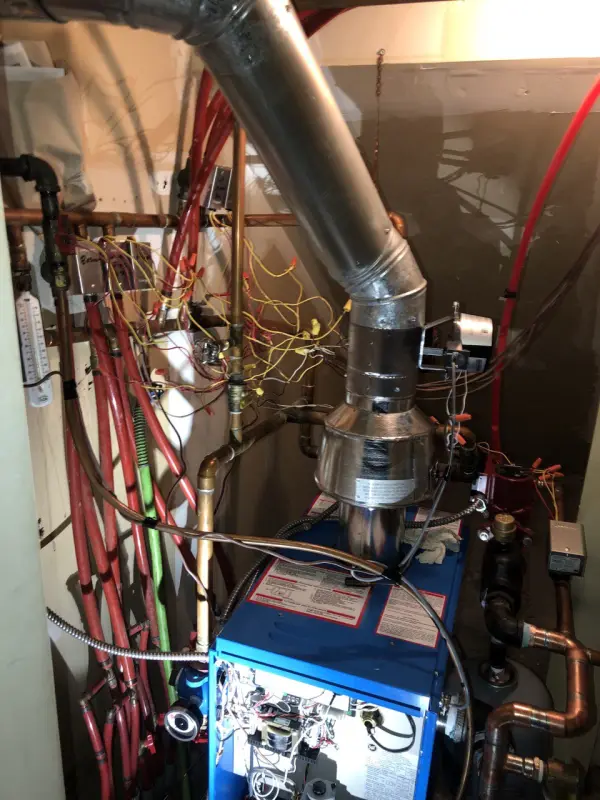
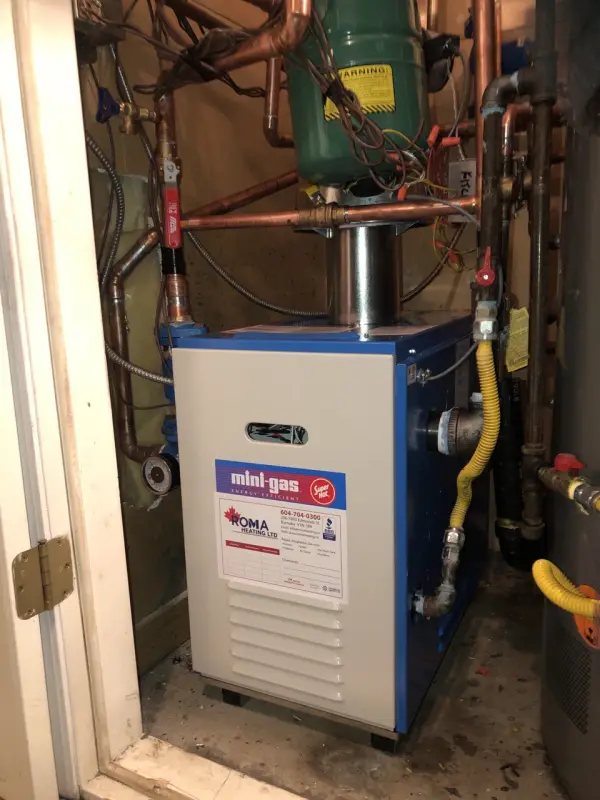
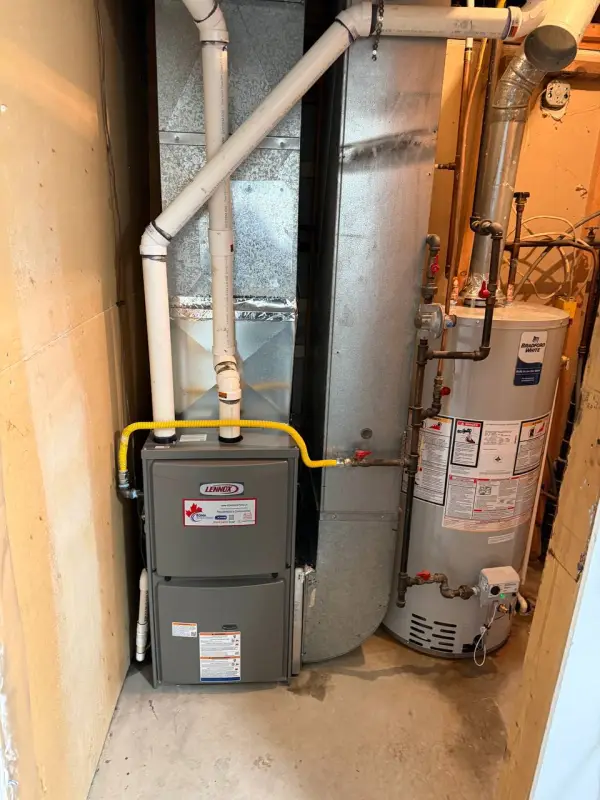
Real ROMA boiler work. These photos are from our own jobs, not stock images. See more in our work gallery or call (604) 704-0300.