Installing a boiler in the West End of New Westminster usually means installing a building’s whole central plant, because most of the district’s housing is 1960s-70s woodframe walk-ups with a high rental share and a single boiler in a common-area mechanical room. Decisions about which boiler goes in — and when — sit with the building owner or manager, and the room itself was never designed for today’s equipment. Old buildings and new plants are a good match, but only when the installation respects the room’s access routes, the venting path, and the building’s rhythm.
ROMA Heating & Cooling has served the West End and the rest of Greater Vancouver since 1999, and boiler installation into aging walk-up buildings is routine for us. Call (604) 704-0300 or book a visit online.
Can a new boiler fit in my building’s old mechanical room?
Usually the real question is whether it fits through the door on the way in. A woodframe walk-up from the 1960s-70s has basement corridors, door widths, stair turns, and mechanical rooms that were sized for the equipment of their era. We measure the installation route before quoting anything. A plant that goes in easily on paper becomes a different job when the access is narrow, and that honesty upfront is what keeps an installation on schedule. The good news: modern equipment is typically compact, and a well-chosen plant improves the room rather than crowding it.
| Installation factor | What it means in this stock |
|---|---|
| Access route | Corridors, doorways, and stair turns decide what will physically move in |
| Venting path | Chimneys and venting were set decades ago; new equipment must suit the existing path or a planned one |
| Wiring and controls | Old buildings often need control cleanup as part of a new installation |
| Water-side condition | Valves and risers may be old enough that flushing and isolation are part of a responsible install |
How long will the building be without heat during the installation?
Call a licensed ROMA HVAC technician — (604) 704-0300
That depends on scope, and the honest answer is that it is planned, scheduled, and communicated rather than guessed at. Much of the work can be staged: this is a common reason we look at the existing system first, so the shutdown window is known and brief, resident notice is handled through whoever manages the building, and suites are back to normal afterwards. What we never promise is a fixed time nobody can verify — we promise a clear plan before any heat is off.
Do we have to shut down for the whole building, or can it be staged?
Staging depends on the existing plant and loop. Where the building has multiple zones or separate equipment, part of the work can happen without touching every suite. Where the single central plant serves everything, the shutdown is what it is — which is exactly why we prefer to understand the system first and make the plan visible to every resident before work begins.
What should a building owner ask before committing?
Ask for the honest reading of the room: what fits, how it gets in, how the venting is handled, what happens to the loop, and what the shutdown picture looks like. A good installation proposal answers all of those before any equipment is ordered. If the owner or manager has a history of small repairs on the old plant, the person they are talking to should want to see that history — it is part of the honest picture for a new installation.
What should be in the plan the owner gets before signing anything?
An honest installation proposal is a short, readable list with five entries in front of the decision: what equipment is proposed and why it fits this room; how it physically arrives (the route, the turning radius, the door widths); how the venting is handled, whether the existing path serves it or a new path is part of the work; what happens to the loop and the water side (the flush, the fresh valves, the reading of the risers); and what the shutdown, notice, and sequencing look like for the building’s residents. A proposal that covers those is a proposal built for a 1970s walk-up. One that only names the equipment is a catalogue page, not a plan.
Are there advantages to installing in the off-season?
Loads of them, and this stock makes use of them. The warm months are when a building that only heats can change its heart with the least disruption: residents are least sensitive to a shutdown, managers have the most calendar room, and the loop’s flush and the plant’s first season together start from a clean place. The honest downside is only in the question of what condition the old plant is in by summer — if the plant is barely holding, the wait has its own cost, and the reading decides the season as honestly as the rest of it. The right window is the one the building’s actual condition supports.
And one note for the decision-maker: the plate photo of the old plant, its age, and its repair history are the three pieces of information that make the whole conversation honest and fast. The beginning of a good installation is the knowledge of what is being replaced.
That is a real fork, and the evidence decides it. If the old plant is sound, a well-scoped service is often the right call. If it is a series of repeated repairs, a new installation typically ends the cycle of temporary fixes. We will give you the straight reading either way — and either way, the gas and carbon monoxide safety basics stand: leave and call FortisBC’s emergency line and 911 if you smell gas, and get everyone out and call 911 if carbon monoxide is suspected.
Telling us what the building runs today is the best start — the brand, the model, the age, and a photo of the rating plate — and we’ll come back with the honest picture. Call (604) 704-0300 or see how ROMA installs boilers across Greater Vancouver.
Learn more about ROMA’s related services.
Need a licensed HVAC technician in Greater Vancouver?
ROMA Heating & Cooling has served Metro Vancouver since 1999 — TSBC-licensed (Gas LGA0202903), bonded & insured, 4.8★ from 221 Google reviews. Upfront flat-rate pricing, free estimates on installs, 0% financing (OAC), no hidden fees, 7 days a week.
Frequently Asked Questions
Who decides when the building's boiler gets replaced with a new one?
The owner or strata-adjacent decision-maker does, in practice. Tenants feel the timing, but the decision runs through management, which is why documented resident reports are a useful lever.
Is a new installation in an old walk-up more work than in a newer building?
Often yes, in the same way any building has its own honesty: access routes, ambient venting, and control wiring are the variables, and each is planned before equipment is ordered.
Can installation happen in summer when the building is not heating?
Yes — the warm months are the natural window for a central plant change in a building that only heats, and it is the window many walk-ups choose.
Will my rent or utilities change because the building got a new boiler?
That is a question for the building owner and manager, and the honest answer varies. On the technical side, we can explain what the new plant will and will not do at the building level.
Do the suites' radiators and risers need replacing when the boiler is replaced?
Not necessarily — loops are read separately. A flush and fresh isolation valves are common companions to a new plant; replacing the whole loop is another decision with its own honest picture.
Reviewed by the ROMA Heating & Cooling team — TSBC-licensed gas contractor (Gas LGA0202903), serving Greater Vancouver since 1999. Updated August 2026.
What Greater Vancouver Homeowners Say
“Nelson worked hard to get the NTI unit fixed. He was always polite, courteous and on time.”
“As always Nelson was super efficient. Showed up on time and was quick to work. I had a full maintenance done on the fireplaces and furnace. He was awesome. I won’t use anyone else.”
“Excellent service. Andy had a spare Carrier inducer with him which saved us time.”
“Was very prompt to respond to our issues. Technician was scheduled for the day following my initial call.”
“Very professional heating company. Price is reasonable, excellent work.”
“Highly recommend this company. It was a pleasure dealing with Shawn and Nelson.”
“Professional and courteous technicians with attention to detail and customer needs.”
“Always great, friendly service. Serviced the hot water on-demand system. Honest and informative. Thanks!”
“Speedy response time, honest, and professional service from start to finish.”
Why Greater Vancouver Trusts ROMA Heating & Cooling
ROMA Heating & Cooling has installed, repaired and maintained heating and cooling systems across Metro Vancouver since 1999. Our team are TSBC-licensed gas fitters (Gas LGA0202903) and Red Seal-trained technicians — licensed, bonded and insured — and we back every job with upfront, flat-rate pricing and a 100% satisfaction guarantee. We hold a 4.8★ rating from 221+ Google reviews.
- Authorized for 30+ brands (Lennox, Carrier, Viessmann, Navien, Rheem & more)
- Upfront flat-rate pricing — no overtime or hidden fees
- Free, no-obligation estimates on new installations
- Locally owned & operated in Burnaby, BC
No Hidden Fees
Our service rates are transparent and easy to understand. You approve upfront, flat-rate pricing before we start — so you never get a bill you didn’t expect.
Licensed & Bonded
ROMA is a TSBC-licensed gas contractor (Gas LGA0202903). Our technicians are bonded, insured and Red Seal-trained — qualified for any heating or cooling system.
Free Estimates
We offer free, no-obligation estimates on new installations — furnaces, boilers, heat pumps, air conditioners, tankless and hot-water tanks.
Part of our Boiler Guide: Hydronic Heating Explained for Metro Vancouver Homes › Boiler installation & replacement
Related guides in this topic:
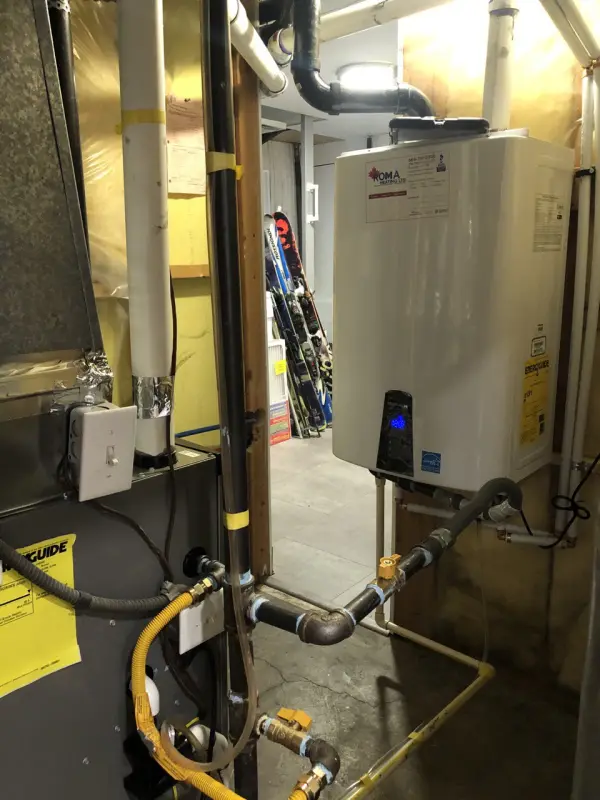
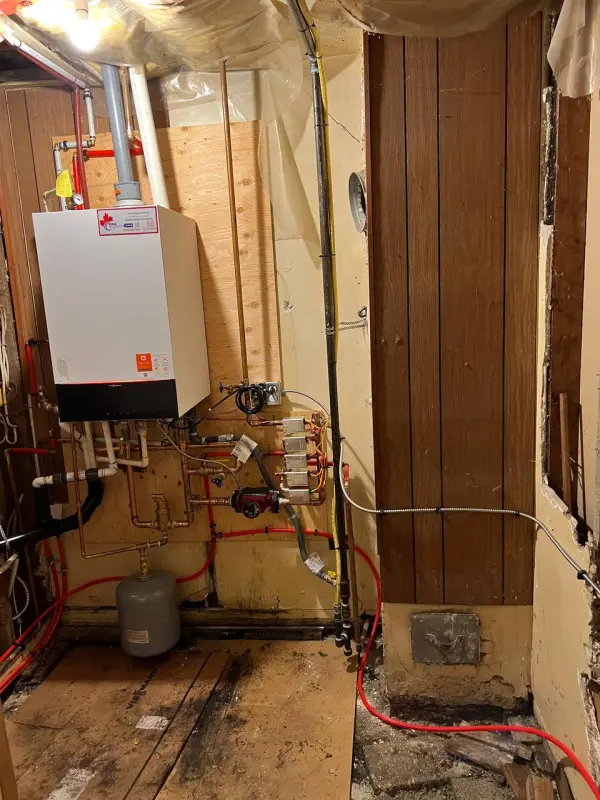
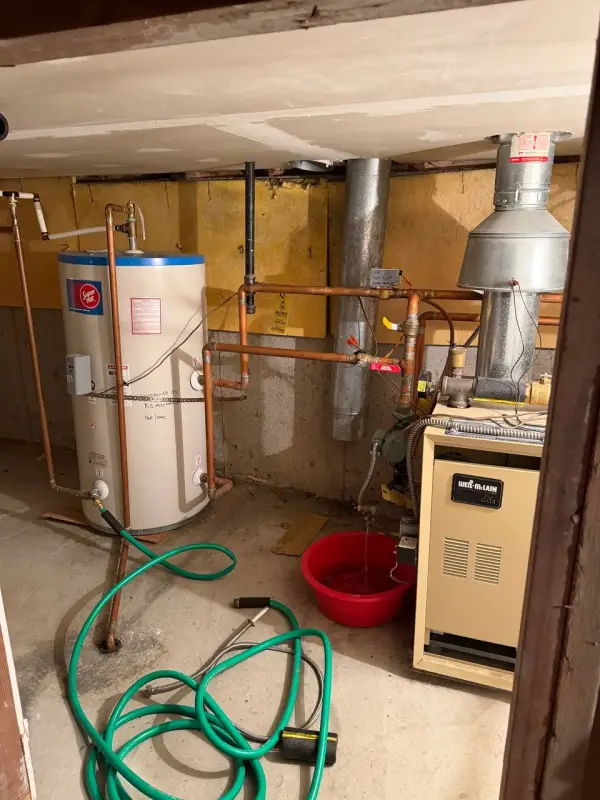
Real ROMA boiler work. These photos are from our own jobs, not stock images. See more in our work gallery or call (604) 704-0300.